









As seen on


Curious what a treatment at VIVA looks like? Watch our treatment demonstration below with the full treatment process with before and afters.

Dr Rupert Critchley MD · Founder, VIVA Skin Clinics · JCCP member
If you’re tired of shaving, waxing and plucking, you’ve probably wondered whether there’s a way to remove hair permanently. The honest answer is more nuanced than most adverts suggest. This guide explains what permanent hair removal really means, whether laser hair removal is permanent, how long results last, why some hair can return, and how laser compares with every other option.
There’s an important difference between two phrases you’ll see a lot:
In the UK, the only method recognised as permanent hair removal is electrolysis. Laser is recognised as permanent hair reduction. For most people, that still means a dramatic, long-term change: far fewer hairs, and the ones that remain are usually finer and lighter.
Laser hair removal gives a permanent reduction rather than a guarantee that every single hair is gone forever. After a full course of six to eight sessions, many people see a reduction of around 70-90% in the treated area. The follicles that are fully damaged stop producing hair, while others produce finer, slower-growing hair.
Most people choose an occasional maintenance session to keep results at their best. Read how laser hair removal works to understand why.
Results from a full course typically last for years. A typical pattern looks like this:
How long results last depends on your hair colour, skin type, the area treated and, above all, your hormones.
Facial hair is one of the most common reasons people look for permanent hair removal. Laser works well on dark facial hair on the upper lip, chin, jawline and sideburns. However, facial hair is often influenced by hormones, so it may need more sessions and regular maintenance compared with areas like the legs.
If you have a small number of stubborn, light or grey facial hairs that laser can’t target, electrolysis can be used to finish them off. Read our guide to facial laser hair removal for women.
At-home devices, most of which use IPL rather than true laser, can reduce hair gradually. But they’re deliberately lower-powered for safety, so most people need to keep using them regularly to maintain results. They aren’t a route to permanent hair removal, and many aren’t suitable for darker skin tones. See our honest comparison of at-home devices vs clinic laser.
For most areas, laser is faster and more practical. It treats hundreds of hairs per second, so even large areas like legs or back can be treated in under an hour. Electrolysis treats each hair individually, which makes it impractical for large areas but useful for small areas or hair that laser can’t target, such as blonde, grey or red hair. Many people use laser for the bulk of hair and electrolysis to tidy up the last few.
Find out more about how many sessions you’ll need.
At VIVA, we use Cynosure Elite+ lasers with Alexandrite and Nd:YAG wavelengths, so we can treat all skin types effectively. Unlike IPL, a medical-grade laser targets the follicle precisely, which usually means longer-lasting results and fewer sessions.
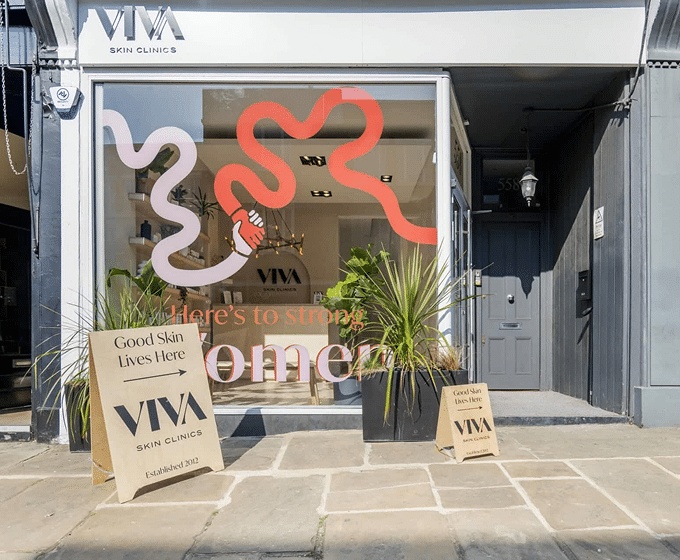
We offer laser hair removal at our Chelsea clinic (558 Kings Road, SW6 2DZ) and our Tunbridge Wells clinic (38 High Street, TN1 1XF). Prices start from £40 per session, and your consultation and patch test are free. See how much laser hair removal costs.
Book your free patch test at VIVA Skin clinics today and experience a hair free summer!
Every treatment at VIVA is carried out by qualified nurses and doctors, so you’re in safe, experienced hands from consultation to aftercare.
Consultations are always free, giving you the chance to talk through your goals, ask questions and get an honest recommendation before you commit. Payment plans are also available across our treatments with Clearpay and Klarna.
You’ll find us at three clinics, with a fourth opening in Surrey this November:
Download the VIVA app to join VIVA CLUB and get 10% off all treatments, plus easy booking and appointment management.
We offer new client bookings and exciting offers monthly, so book soon to secure your appointment. Our consulations are free and we offer flexible finance.
Book online here or through the VIVA app. For any questions, call us on 02037 332199 (Mon–Fri 10am–7pm, Sat 10am–4pm).
While your dedicated practitioner will always be there to answer every last one of your questions in person, this section is here to give you a bit of a head start on some of our most common queries.
Usually because of hormonal changes, follicles that were resting during treatment, or an unfinished course.
No. Most at-home devices use lower-powered IPL and need ongoing use to maintain results.
Laser can greatly reduce dark facial hair, though hormone-driven hair often needs maintenance. Electrolysis can remove remaining hairs permanently.
Electrolysis is the only method recognised as permanent hair removal, but it treats one hair at a time.
Results from a full course typically last for years. Many people have a maintenance session once or twice a year.
Laser gives a permanent reduction rather than permanent removal. Most people have a large, long-lasting reduction, with occasional maintenance.
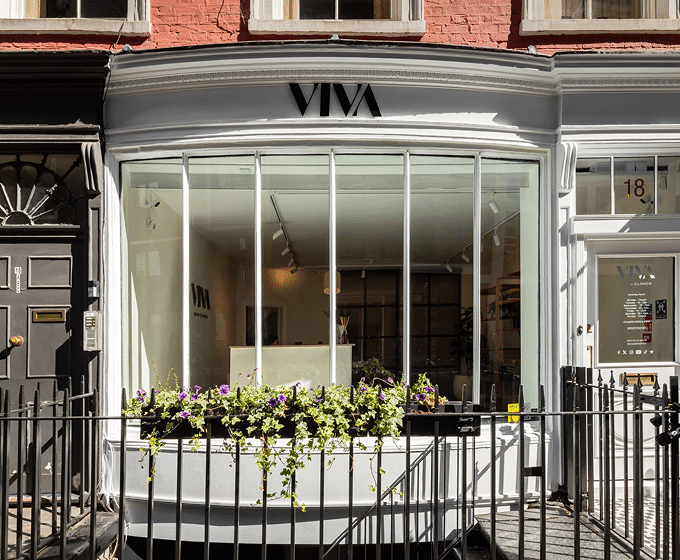
We have two convenient locations in London and one in Kent located in beautiful Tunbridge Wells. Click below to find your nearest VIVA!
Get our special offers, see before and afters and learn more about what makes VIVA Skin clinics the Uk’s leading cosmetic clinic.