









As seen on


Curious what a treatment at VIVA looks like? Watch our treatment demonstration below with the full treatment process with before and afters.

Dr Rupert Critchley MD · Founder, VIVA Skin Clinics · JCCP member
As we age, our faces change, and often this means facial sagging. Part of this facial sagging is the appearance of marionette lines the creases that run from the corners of the mouth down towards the chin and make the whole lower face look tired and downturned.
They’re one of the most common concerns we see at our London clinic, and one of the most treatable. Let’s have a look at what exactly they are, why they form, and how dermal fillers for marionette lines work.
Marionette lines are the lines which extend from each corner of your mouth down towards your chin. They are given their name from marionette string puppets, which are known for having split jaws.
Marionette lines can also cause your mouth to look downturned, giving you an unhappy appearance. This is the part most patients find hardest to live with. The lines themselves are relatively subtle, but because the brain reads the corners of the mouth as an emotional signal, a downturned mouth registers as sadness or disapproval even when your face is completely relaxed. Many of our London patients tell us the treatment they want isn’t really about the lines at all – it’s about no longer being asked whether something is wrong.
In the early stages, marionette lines appear only when you speak or smile, and vanish the moment your face relaxes. Over time they become etched into the skin and stay visible at rest. As they deepen, the tissue between the line and the jawline can begin to sag, contributing to jowling along the lower face.
Marionette lines are often confused with nasolabial folds, which we cover further down, as the two need slightly different treatment approaches.
Marionette lines are not simply wrinkles. They’re the visible result of structural change across the whole lower face, and understanding this is what separates effective treatment from disappointing treatment.
One of the first reasons is that, as we get older, the fat pads in our upper face gradually diminish, whilst the fat pads in our lower face become fuller. This causes our skin to sag downwards towards our lower face and develop folds.
The face isn’t padded evenly and it contains distinct compartments of fat that give it shape and support. When the upper compartments deflate, the tissue above them loses its scaffolding and descends. It then folds at the points where skin is anchored to the underlying structure, and one of those anchor points sits precisely at the corner of the mouth.
This matters enormously for treatment. The marionette line is not really the problem in itself. It’s the visible consequence of volume that has been lost higher up the face. Treating the line without addressing that loss is why some filler results look heavy rather than natural.
Secondly, it is important to note that the skin around your mouth is thinner compared with the rest of your face, so it is more prone to wrinkling. Thinner skin creases more readily and recovers from creasing less well, which is why lines form here earlier than across the cheeks or forehead.
From around the age of 25, collagen production falls by roughly one per cent each year. Elastin, the protein that allows skin to spring back after movement, declines alongside it and isn’t replaced once lost.
Skin with less collagen is thinner and folds more easily. Skin with less elastin doesn’t bounce back afterwards. Together this means a crease that once disappeared instantly gradually becomes permanent.
Less obvious but equally important, the facial skeleton changes shape over time. The jawbone loses height and density and the bony opening around the mouth widens. The framework beneath the lower face effectively shrinks while the soft tissue covering it does not, leaving excess tissue with less to sit on.
The mouth is the most mobile part of the face. Every conversation, smile and expression creases the same area thousands of times a week. In younger skin these creases resolve immediately; in skin with reduced collagen they accumulate. Gravity then acts on tissue that has lost its support, drawing it steadily downward over years.
Some people are more prone to marionette lines regardless of age. A naturally downturned mouth, a receded chin or a less defined jawline all predispose you to developing them earlier and more deeply.
Smoking accelerates collagen breakdown and is one of the clearest contributors to lower face ageing. Cumulative sun exposure degrades both collagen and elastin. Significant weight loss removes facial fat along with body fat, sometimes revealing marionette lines that weren’t previously obvious.
Most people begin to develop marionette lines in their late 30s or early 40s. In the early stages, these lines are barely visible, but as time goes by these creases can become very deep and noticeable.
Once they have appeared, the only way to fix marionette lines is to get to the source of the problem – and normally that means replacing the lost volume with dermal filler.
One of the most effective treatments for deep wrinkles such as marionette lines is dermal filler injections. They are great for gently plumping out wrinkles, resulting in a smoother, fresher and more youthful appearance.
Dermal fillers used for this area are gels made from hyaluronic acid, a substance your body already produces and which holds a significant amount of water relative to its weight. Injected beneath the skin, the gel provides physical volume and structure exactly where it has been lost.
You can use dermal filler to treat marionette lines in two ways.
Firstly, injecting filler to add volume in the cheeks will replace the lost volume in that area. This treatment lifts your skin and, as a result, reduces the appearance of the lines. It’s often the more important half of the treatment, because it addresses the cause rather than the symptom and it usually means less product is needed around the mouth itself.
Secondly, dermal fillers can be injected below the corners of the mouth to lift the smile and fill out minor creases. This replaces lost volume by hydrating and treating deep wrinkles and folds, making the skin look more youthful. Small, precisely placed volumes here can lift a downturned mouth corner, which changes the expression your face conveys at rest.
Patients are sometimes surprised that a marionette line treatment involves areas they hadn’t thought about. A receded or short chin pulls the tissue around the mouth downward and makes marionette lines noticeably worse, so adding structure to the chin can improve the lines without any filler going into them at all.
This whole-face approach is one of the clearest differences between an experienced injector and an inexperienced one. Treating a visible line is straightforward. Recognising that the line is being caused by volume loss two inches higher, or by a lack of chin projection below, requires proper assessment.
Not all dermal fillers behave the same way. They differ in firmness, elasticity and how much lift they provide.
Firmer, more robust fillers hold their shape well under pressure and are used deeper, on or near bone, to rebuild structure in the chin, jawline and cheeks. Softer, more flexible fillers are used closer to the surface and in mobile areas around the mouth, where a stiff product would look and feel wrong during movement.
A typical marionette lines treatment may therefore use two different products or a firmer filler to rebuild the underlying support and a softer one to refine the line itself. Using a single product for both jobs is a common cause of results that look fine at rest and wrong in motion.
All hyaluronic acid fillers share one significant advantage: they can be dissolved. An enzyme called hyaluronidase breaks the product down, so if a result isn’t what you wanted, or if a complication arises, it can be removed.
Every treatment at our London clinic begins with a consultation. This isn’t a formality it’s where the plan is made, and you should expect to be asked at least as many questions as you ask.
We’ll assess your face at rest and in movement, looking at volume across the whole lower face rather than at the lines in isolation. We’ll go through your medical history, any medications, and any previous filler you’ve had, including where and when. And we’ll talk about what’s bothering you and what you want the result to be.
You should also expect an honest conversation about what filler can and can’t do. Marionette lines caused mainly by loose skin will respond only partially to dermal fillers, and in some cases a skin-tightening treatment will serve you better. We’d rather tell you that than take the booking.
We usually take photographs first, from several angles, so we can compare before and after gradual improvement is surprisingly easy to forget.
The area is cleansed and a topical anaesthetic applied, generally left on for 15 to 20 minutes. Most modern dermal fillers also contain lidocaine, which numbs the area further as treatment progresses.
Your practitioner then places the filler using either a fine needle or a blunt-tipped cannula, depending on the area and depth. Cannulas are often preferred around the mouth as they move through tissue rather than piercing it, which reduces bruising.
Filler is placed gradually, with the area assessed between placements. You may be asked to sit up, smile or talk, so the result can be judged in movement rather than only lying flat. Treatment usually takes 30 to 45 minutes.
Afterwards we’ll ask you to avoid makeup on the treated area for 12 to 24 hours, skip strenuous exercise, saunas, steam rooms and sunbeds for 24 to 48 hours, and limit alcohol for the first day. Sleeping on your back for the first night or two helps.
Most people return to normal activities straight away, though it’s sensible to book treatment at least two weeks before any significant event in case of bruising.
Results are immediate, and will last 6 to 12 months. The expected longevity of your fillers will also depend on the specific brand, your metabolism and other factors. We always recommend patients book in for maintenance treatments every 6 months.
That range is wide for good reason. Firmer fillers placed deeply on bone in the chin or cheeks tend to last at the upper end, while softer fillers placed in the mobile tissue around the mouth break down faster, because constant movement accelerates the process. A fast metabolism and high levels of exercise will also shorten how long your results last.
Although you’ll see a change immediately, that isn’t your final result. Some swelling is normal in the first few days, so the area may look fuller than it eventually will. The filler also integrates with the surrounding tissue over the following fortnight, settling into a softer, more natural position.
Judge your result at two weeks rather than at two days. We’ll usually see you again at around the two to four week mark to review how it has settled and add a small amount more if needed.
By four weeks, marionette lines are usually substantially softened rather than completely erased and complete erasure generally isn’t the aim, since a lower face with no definition at all looks artificial.
What most patients notice is less about the lines and more about the overall impression: a face that looks rested rather than tired, and neutral rather than unhappy. The comments tend to be that you look well, rather than anyone identifying what you’ve had done.
The most common worry patients raise about dermal fillers is looking overdone. It’s a fair concern, and worth addressing directly.
Overfilled faces aren’t caused by filler. They’re caused by how filler is used.
Treat the cause, not just the line. Packing product straight into a deep groove without addressing the volume loss behind it creates a firm ridge that looks acceptable straight on and obvious in profile. Restoring support first, then refining the line, gives a softer result using less product overall.
Less at a time. Filler is easy to add and less convenient to remove. A conservative amount with a two-week review will give you a better outcome than trying to achieve everything in one session. This is especially true for first-time patients, who often find a modest result is more than enough.
Assess in movement. The lower face moves constantly. Filler that looks right on a reclined patient can look wrong when you smile or speak, and the only way to know is to check.
Accept the limits. Dermal fillers treat volume loss. They don’t treat loose skin, and trying to compensate for laxity by adding more volume is exactly how faces end up looking inflated. Where skin laxity is the main issue, we’ll say so and suggest something more appropriate.
These two are often confused, and they aren’t the same thing.
Nasolabial folds run from the outer edge of each nostril down to the corners of the mouth. Everyone has them to some degree as they are a normal sign of aging.
Marionette lines continue from the corners of the mouth downward towards the jawline. Unlike nasolabial folds, they aren’t present in youth and only appear as the lower face changes.
The two are closely related. Both result largely from mid-face volume loss, which is why treating the cheeks often improves both at once. Marionette lines usually need attention to the chin and jawline as well, though, because the downward pull from below is a major contributor.
At consultation we’ll assess both, and your treatment plan will generally address the lower face as a whole rather than one line at a time.
Dermal fillers are the most direct treatment, but they’re not the only option, and they often work best alongside something else.
Anti-wrinkle injections. A small dose in the muscle that pulls the corner of the mouth downward releases that downward tension, letting the corners sit higher. Combined with filler, this addresses the muscular component while the filler addresses volume.
Skin-tightening treatments. Radiofrequency and similar technologies stimulate collagen and tighten the skin. Where laxity is contributing to the lines, these treatments do something fillers cannot.
Collagen-stimulating injectables. Rather than adding volume directly, these prompt your skin to produce its own collagen over several months, improving quality and thickness across the lower face.
Skin boosters and polynucleotides. These improve the hydration, texture and thickness of the skin itself. They won’t lift a fold, but better-quality skin creases less and reflects light more evenly, making existing lines less obvious.
Most patients do best with a combination of filler for structure and a skin quality or tightening treatment spaced over the following months.
Dermal filler is a medical treatment and carries genuine risks, and any clinic presenting it as completely risk-free isn’t giving you what you need to make a decision.
Common and expected: swelling for the first 24 to 72 hours, bruising at injection points which can last up to two weeks, tenderness, redness immediately afterwards, and small lumps or firmness as the product settles. These generally resolve on their own.
Less common: asymmetry, usually correctable at review; persistent lumps, which can be massaged, adjusted or dissolved; prolonged swelling; infection at an injection site; and delayed inflammatory reactions, which are uncommon and usually treatable.
Rare but serious: the most serious complication is vascular occlusion, where filler enters or compresses a blood vessel and interrupts blood supply to the tissue. This is why injector qualification matters so much a practitioner with thorough anatomical knowledge knows where the vessels run, and one trained in complication management recognises the warning signs early and treats immediately with hyaluronidase.
Who shouldn’t have treatment: filler isn’t appropriate if you’re pregnant or breastfeeding, have an active infection or skin condition in the area, or have a known allergy to hyaluronic acid or lidocaine. Blood-thinning medication increases bruising risk and should be mentioned. Recent or upcoming dental work, vaccinations and significant illness can all affect timing.
Contact us promptly if you have severe or increasing pain, skin that looks white, mottled or unusually dark, skin that feels cold, spreading redness or heat, fever, any visual disturbance, or anything that isn’t settling as expected. We would always rather hear from you unnecessarily than late.
Book your consultation
To book in with us, use our online booking feature. You can also find our price list online.
Every treatment at VIVA is carried out by qualified nurses and doctors, so you’re in safe, experienced hands from consultation to aftercare.
Consultations are always free, giving you the chance to talk through your goals, ask questions and get an honest recommendation before you commit. Payment plans are also available across our treatments with Clearpay and Klarna.
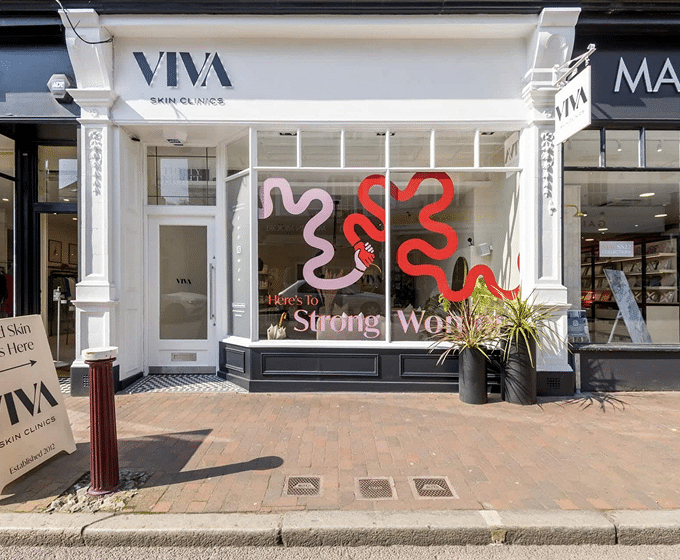
You’ll find us at three clinics, with a fourth opening in Surrey this November:
Download the VIVA app to join VIVA CLUB and get 10% off all treatments, plus easy booking and appointment management.
We offer new client bookings and exciting offers monthly, so book soon to secure your appointment. Our consulations are free and we offer flexible finance.
Book online here or through the VIVA app. For any questions, call us on 02037 332199 (Mon–Fri 10am–7pm, Sat 10am–4pm).
Choose between our experienced nurse practitioners and doctors. All treatments include a consultation and aftercare.
While your dedicated practitioner will always be there to answer every last one of your questions in person, this section is here to give you a bit of a head start on some of our most common queries.
Tell us. Minor issues can usually be adjusted at your review, and if you're genuinely unhappy the filler can be dissolved.
Avoid alcohol for 24 hours beforehand and, if medically safe for you, avoid ibuprofen, aspirin, fish oil and vitamin E for a few days, as all increase bruising. Never stop prescribed medication without speaking to the doctor who prescribed it.
Most of our patients are in their late thirties to sixties, though this varies widely with genetics. There's no correct age as it depends on when the change starts bothering you.
Not when placed properly. Well-planned treatment replaces volume that's been lost rather than adding new bulk, and the amounts used here are modest.
Yes. Hyaluronic acid fillers can be dissolved with hyaluronidase, which breaks the product down within a day or two.
Most people return the same day. Some swelling and redness is likely for a day or two, and bruising is possible, so plan treatment at least two weeks before anything significant.
Discomfort is mild for most people. We apply topical numbing cream beforehand and most fillers contain local anaesthetic. Expect pressure rather than sharp pain.
Most treatments use between 1ml and 3ml, depending on how deep the lines are and whether the cheeks, chin or jawline are being treated at the same time. We'll estimate this at consultation.
Actual patient results from our clinic. Every treatment is tailored for a natural, balanced enhancement.
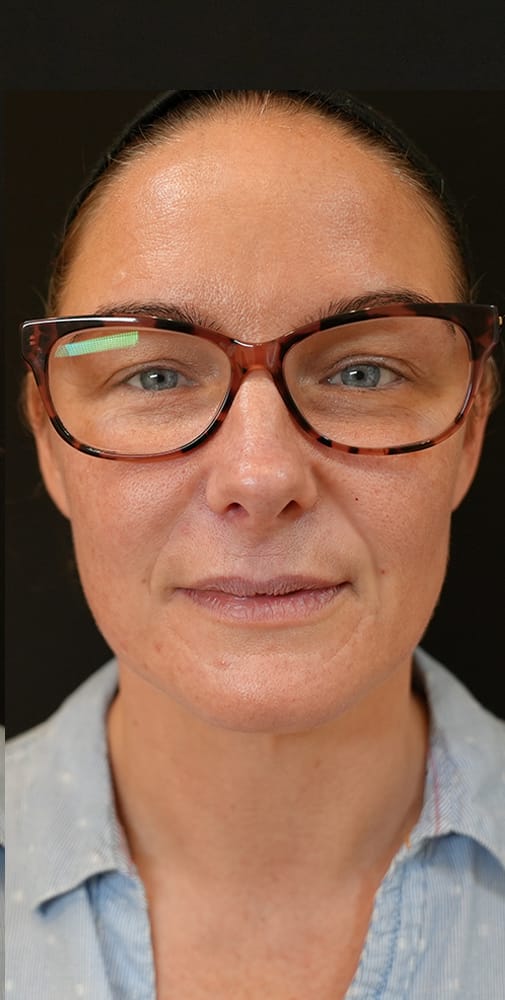
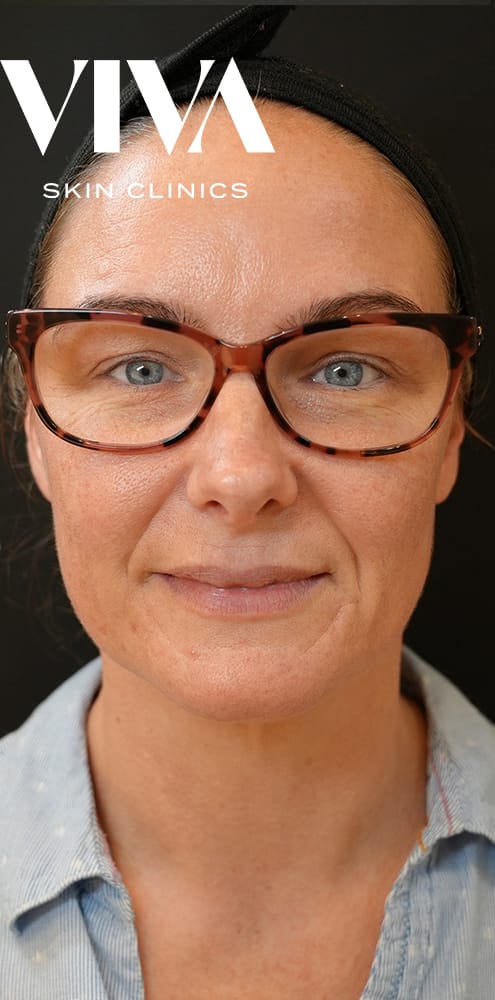
Nurse Vikki
We have two convenient locations in London and one in Kent located in beautiful Tunbridge Wells. Click below to find your nearest VIVA!
Get our special offers, see before and afters and learn more about what makes VIVA Skin clinics the Uk’s leading cosmetic clinic.